
Introduction
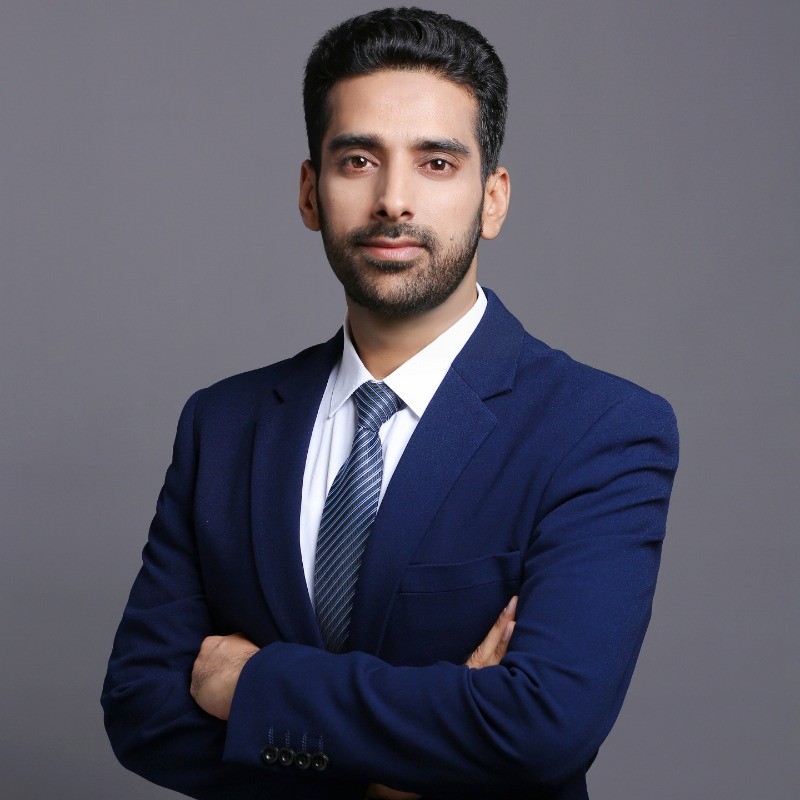
Muhammad Umar Farooq Qaisar (IEEE Member) received his B.S. degree from the International Islamic University, Islamabad, Pakistan, in 2012, and his M.S. degree in Computer Science and Technology from the University of Science and Technology of China (USTC) in 2017. He earned his Ph.D. in Computer Science and Technology from USTC in 2022. He was a postdoctoral fellow at the School of System Design and Intelligent Manufacturing, Southern University of Science and Technology, from 2022 to 2024. He then served as an Associate Professor in the School of Computer Science at Northwestern Polytechnical University from 2024 to 2025. He is currently an Associate Professor at the Hangzhou International Innovation Institute, Beihang University. His main research interests include IoT, WSN, SDN, VANETs, ISAC, UAVs, and communication security.
1. Could you briefly introduce your current role and research focus?
I am currently an Associate Professor at the Hangzhou International Innovation Institute, Beihang University. My research focuses on wireless communication and network systems, particularly in areas such as the Internet of Things (IoT), Wireless Sensor Networks (WSNs), Wireless Rechargeable Sensor Networks (WRSNs), Vehicular Ad Hoc Networks (VANETs), Software-Defined Networking (SDN), Integrated Sensing and Communications (ISAC), and Unmanned Aerial Vehicles (UAVs). My work aims to enhance the efficiency, reliability, and security of these technologies in modern communication systems.
2. What are some of the most memorable learning or campus life experiences you had at USTC?
One standout memory was presenting my first major research paper at the IEEE International Conference on Mobility, Sensing, and Networking (IEEE MSN), organized by the School of Computer Science and Technology in 2016. The encouragement I received from faculty and peers significantly boosted my confidence and inspired me to pursue more impactful and high-quality research. Moreover, the friendships I built with labmates from diverse backgrounds made my time at USTC not only academically enriching but also deeply meaningful on a personal level.
3. How has your time at USTC positively influenced your professional development?
My time at USTC laid a strong foundation for both my academic and professional development. The rigorous training in research methodologies, critical thinking, and problem-solving equipped me with the necessary skills to tackle complex challenges in wireless communication systems. USTC's high academic standards, particularly within the School of Computer Science and Technology, and its global outlook helped me develop a strong research ethic and the confidence to contribute meaningfully to international scientific communities.
One of the most transformative aspects of my journey was the mentorship I received from Professor Xingfu Wang and Professor Ammar Hawbani. Their guidance significantly sharpened my research capabilities and shaped my professional outlook. Moreover, the professional networks I built during my time at USTC have led to valuable collaborations and opened doors to a wide range of international opportunities.
4. Were there any particular teachers or courses at USTC that had a profound impact on you?
Two mentors at USTC fundamentally shaped my academic journey: Professor Xingfu Wang and Professor Ammar Hawbani. Their guidance helped shape my research approach, combining rigorous analysis with creative thinking. Both professors led our research group with exceptional leadership and positive energy, while making significant contributions to the research community.
5. What has it been like transitioning from a student to a university professor? What are your key takeaways in teaching and research?
Transitioning from a PhD student at USTC to an Associate Professor—first at Northwestern Polytechnical University and now at the Hangzhou International Innovation Institute, Beihang University—has been both challenging and deeply rewarding. Moving from conducting research under supervision to leading independent projects required a significant mindset shift. Suddenly, I became responsible not only for my own work, but also for designing research directions (such as our ISAC-assisted WRSN studies), mentoring students, and teaching undergraduate and graduate courses. My postdoctoral position at SUSTech served as a crucial bridge during this transition, allowing me to develop leadership skills within a supportive research environment before taking on full faculty responsibilities.
My Key Takeaways in Teaching and Research
Central to my teaching approach is transforming complex technical concepts into relatable, real-world applications while empowering students to take the lead. This philosophy extends beyond the classroom. My Springer monograph, Empowering IoT: Reliability, Network Management, Sensing, and Probabilistic Charging in Wireless Sensor Networks (published July 2025), synthesizes key advancements in IoT efficiency and reliability. Though developed independently, its insights directly inform how I mentor graduate researchers to solve concrete network challenges.
Research excellence demands interdisciplinary synthesis and intentional collaboration. My work integrates Software-Defined Networking with Wireless Sensor Networks (SDN-WSN) and Integrated Sensing and Communications with Wireless Rechargeable Sensor Networks (ISAC-WRSN), addressing critical energy and reliability trade-offs—as demonstrated in publications in IEEE Transactions on Mobile Computing (2022, 2024) and ACM MobiCom (2024). Through international partnerships spanning Europe, China, and Pakistan, we accelerate innovation supported by peer-reviewed journals and major conferences.
6. What are your views on the future of computer application technologies? Any advice for current students?
The Future of Computer Application Technologies
Future computer technologies will evolve into deeply integrated systems that anticipate and adapt to human needs, moving beyond standalone tools. The real revolution lies in convergence. While advancements in IoT and networking will continue to play a crucial role—enabling everything from industrial sensors that predict equipment failures to smart cities with self-optimizing traffic flows—AI will increasingly impact education (through adaptive learning platforms), healthcare (such as AI-powered diagnostics from medical scans), and sustainability (algorithms that reduce energy waste in supply chains). Ethical AI frameworks will be essential to ensure these advancements empower rather than exclude, while quantum computing may unlock breakthroughs in material science and climate modeling.
Importantly, IoT and networks will serve as the nervous system of this evolution: billions of connected devices collecting real-time data, combined with ultra-reliable 5G/6G networks, will enable seamless communication between humans, machines, and environments. The future is not merely "smart"—it is human-centered, sustainable, and autonomously responsive.
Advice for Current Students
Build a solid foundation in systems design, data structures, and algorithms—these are essential for progress in distributed systems, networking, and AI. Code every day: contribute to open-source projects, solve problems on platforms like LeetCode, or create your own tools (such as a lightweight OS scheduler or a network packet analyzer). Focus deeply on mastering a few core computer science concepts rather than touching lightly on many areas.
Incorporate best practices—clean architecture, thorough testing, and version control (Git)—into every project. When addressing real-world problems (such as optimizing data transmission from IoT devices), always validate your solutions mathematically. Remember, complexity analysis is an engineering discipline, not just an academic exercise.
7. How do you usually stay connected with USTC? What are your expectations for the alumni network and the university?
I stay connected to USTC through ongoing mentorship from my professors and engagement in research collaborations, student mentorship, and support for student-led initiatives. As an alumnus, I envision a dynamic network that:
Creates mentorship bridges between senior and recent graduates
Facilitates joint grant proposals and research collaborations
Spotlights alumni-led breakthroughs to inspire current students
8. Lastly, is there anything you would like to say to USTC and fellow alumni around the world?
To USTC: Your belief in cross-cultural education—exemplified by my journey from Pakistan to China—has reshaped futures, including my own.
To my fellow alumni: Our strength lies in unity. Let us create a "knowledge without borders" ecosystem—funding joint labs, amplifying student voices, and transforming research breakthroughs into global public goods. Together, we honor USTC by lighting the path for those who follow.

