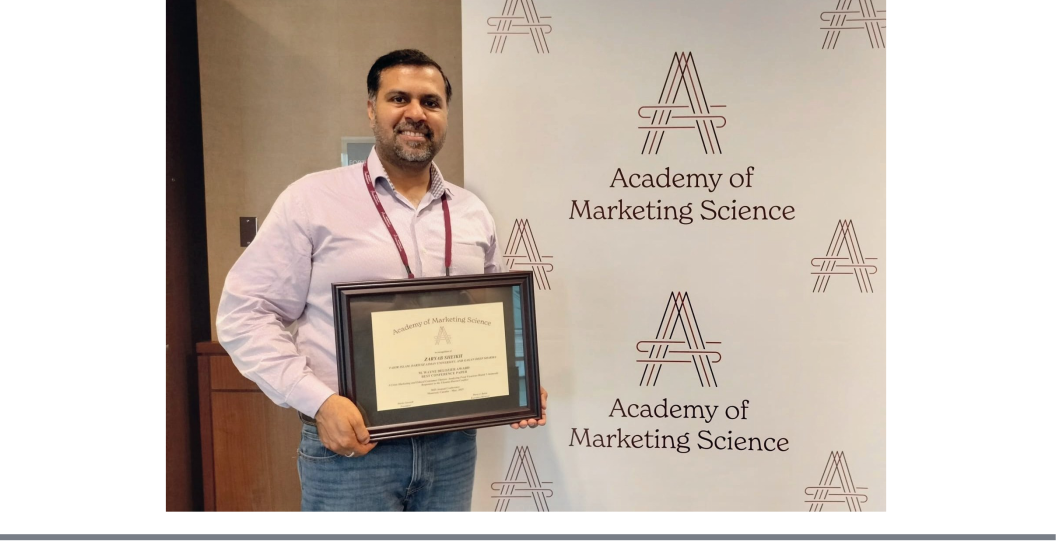
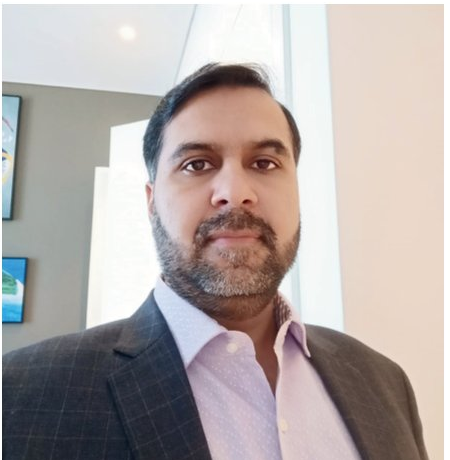
Dr. Zaryab Sheikh holds a PhD in Digital Marketing from USTC (China) and brings 18 years of diverse experience across academia and corporate sectors, including a role at PEPSI-COLA. He is currently an Assistant Professor at Newcastle Business School, Northumbria University (UK), and has previously held academic positions at Nottingham Trent University (UK), NUST Business School (Associate Professor), and other top Pakistani universities. His research, focusing on social commerce, online consumer behavior, and digital marketing, has been published in multiple ABS-listed journals such as Information Technology & People and Personnel Review. He has presented at international conferences in the UK, USA, Canada, UAE, and Thailand. He won the best conference paper award at Academy of Marketing Science, held in Canada 2025. Dr. Sheikh has served as an external examiner for PhD theses at the University of Technology Sydney and for MS defenses at various institutions. He successfully led the development and validation of a new Master’s programme in Marketing and an MBA. He has supervised numerous undergraduate and postgraduate research projects/theses.
I never set out to become an academic. Like many in my generation, I started my career in the corporate world, eventually landing a role at Pepsi-Cola. It was fast-paced, high-stakes, and deeply formative. But after nearly two decades spanning both corporate and academic environments, I found myself at a crossroads. I had accumulated tremendous experience, but I also had a clear view of my own blind spots. At Pepsi, I saw how high-stakes decisions suffered when practice outpaced theory. I realized that the next chapter of my career needed a foundation rigorous enough to match my ambitions. So, I hit the “reset” button—not as a retreat from experience, but as a deliberate investment in depth. That decision led me to pursue a PhD in Digital Marketing at the University of Science and Technology of China (USTC) under the Chinese Government Scholarship.
Choosing USTC was a bold move for a Pakistani scholar with a corporate background. At the time, most people were still looking West for technological leadership. But I was paying close attention to China’s quiet but calculated investments in AI, e-commerce, and digital infrastructure. The scale of ambition was unmistakable: a government actively aligning policy, talent, and capital behind a single digital vision. For someone with my background, USTC wasn’t just a prestigious institution; it was a front-row seat to one of the most consequential technological transformations of our time. The scholarship wasn’t a convenience; it was a signal that this ecosystem was serious about engaging global talent. Sometimes the boldest professional decision is simply being willing to go where the future is being built before everyone else realizes it.
My time in Hefei (2014–2017) coincided with the meteoric rise of WeChat, Alipay, and mobile-first commerce. There’s a fundamental difference between studying a revolution and living inside one. Reading about these platforms from abroad gives you data points; being in China as they scaled gave me behavioral intuition. I watched entire populations leapfrog traditional banking and rebuild social interaction around a single super-app. That experience shifted my theoretical lens entirely. I stopped asking “will users adapt?” and started asking “what happens when infrastructure moves faster than research?” China proved that scale, culture, and state alignment produce outcomes no Western framework fully anticipated—and that rewired how I think about digital transformation.
Completing a PhD in roughly three years was a remarkable feat, but it was clarity of purpose that kept me going. I wasn’t starting from zero; years of real-world experience meant I arrived with sharp research instincts and a low tolerance for ambiguity. I knew what I was looking for, which eliminated much of the drift that slows doctoral candidates down. Did I question whether the finish line was worth it? Absolutely. Doubt is part of the process. But I was convinced that I wasn’t just earning a degree; I was building the intellectual foundation for everything I wanted to do next.
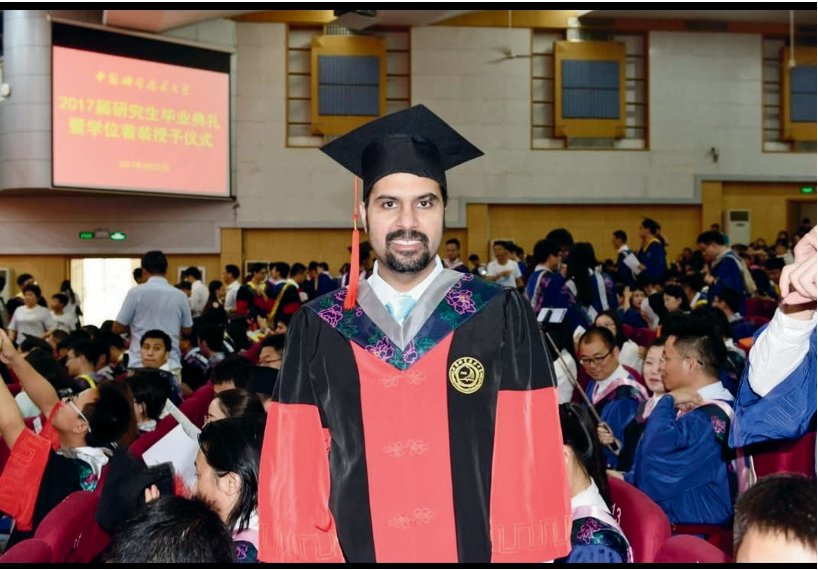
Beyond the seminar room, Hefei taught me that humility is a competitive advantage. As a foreigner navigating daily life in a city not built for outsiders, you quickly learn that confidence without adaptability is just arrogance. Whether decoding social dynamics with local colleagues or finding my way through a city where few spoke my language, I learned to listen more than I speak, observe more than I assume, and never mistake unfamiliarity for inferiority. That lesson translated directly into my research and leadership style.
That same observational instinct later proved invaluable when the COVID-19 pandemic became a natural experiment for my work on social commerce. What lockdowns revealed was that people don’t just shop for products; they shop for connection, validation, and belonging. Social commerce turned consumption into a communal experience, and that shift is irreversible. Three things I believe are permanent: trust through community over brand messaging, entertainment as an expectation within the buying journey, and the complete collapse of the boundary between content and commerce. Consumers no longer distinguish between scrolling and shopping, and no pandemic reversal will undo that rewiring.
My comparative studies on citizen engagement with government social media across Pakistan, China, and the UK yielded a surprising insight: citizens everywhere engage for the same core reason—they want to feel heard. The platforms differ, the political contexts differ, but the underlying motivation is remarkably universal. In China, engagement was driven by efficiency and responsiveness. In Pakistan, it was more emotional; people sought acknowledgment from institutions that had historically felt distant. In the UK, it was accountability—citizens engaging to hold, not just connect. What surprised me most was that trust isn’t a prerequisite for engagement; it’s the outcome people are chasing. People engage precisely because trust is absent, hoping the interaction will build it. That completely reframed how I think about government digital strategy: it’s not about broadcasting services, but consistently signaling that someone is listening.
Applying Western-centric theories to diverse Asian markets—from fashion consumption in Thailand to digital habits in Pakistan—requires constant vigilance. Western theories are useful starting points, but dangerous endpoints. I treat established frameworks as hypotheses, not conclusions. The first question I ask is “what does this context change?” not “does this framework fit?” Culture, infrastructure, and social hierarchy are moderating variables that Western models routinely underestimate. In Pakistan, trust is familial before it’s institutional. In Thailand, status signaling drives consumption in ways standard utility models miss entirely. The safeguard is always grounding theory in local reality first, and letting the market tell its own story before imposing a borrowed narrative.
This philosophy extends to my work on social protection initiatives, such as Pakistan’s Sehat Sahulat health program. Why should a digital marketing scholar care about social protection? Because digital transformation without inclusion is just innovation for the privileged. These programs are fundamentally communication and behavior change challenges—which puts them squarely in my domain. The question of why eligible citizens don’t enroll, don’t engage, or don’t trust a government health scheme is the same question I ask about any digital platform: where does awareness break down, where does trust collapse, and what messaging actually drives action? Digital marketing scholarship has powerful tools—behavioral insights, adoption frameworks, engagement models—that social policy desperately needs. The intersection is citizen-as-consumer, and understanding that overlap is how you design programs that actually reach people rather than just exist on paper.
In my research on Green Human Resource Management, I’ve found that corporate sustainability is mostly compliance dressed up as conviction. Genuine environmental concern exists, but it rarely drives the initial decision. What moves organizations is regulatory pressure, reputational risk, and increasingly, investor expectations. Sustainability initiatives tend to follow the money before they follow the mission. The real friction lies at the implementation layer—middle management. Leadership announces green commitments, policy frameworks get drafted, but the behavioral change required at the operational level is where it quietly dies. Green HRM demands that sustainability becomes embedded in hiring, training, and performance evaluation, and most organizations haven’t made that cultural leap yet.
With generative AI disrupting everything from content creation to consumer insights, we’re deploying at the speed of innovation but regulating at the speed of bureaucracy. The most under-researched area is AI-driven psychological profiling at scale. We don’t fully understand the long-term consequences of hyper-personalization on consumer autonomy. Are we informing choices or quietly engineering them? Second is synthetic trust—as AI-generated influencers and brand voices become indistinguishable from authentic ones, we have no robust framework for measuring that erosion. And finally, consent in predictive marketing: when an algorithm knows what you want before you do, traditional notions of informed consent become philosophically meaningless. The research is nowhere near where the practice already is, and that gap is dangerous.
As a Pakistani researcher in China during a period of deep geopolitical ties, I found that being Pakistani wasn’t a footnote—it was a lens. The warmth between the two countries created genuine goodwill at a human level; doors opened more readily, collaborations felt less transactional, and there was an inherent curiosity about Pakistani perspectives that I leveraged as a researcher. CPEC was gaining momentum during my time there, which made my presence contextually relevant in ways that enriched conversations beyond the classroom. The challenge, however, was intellectual independence. In any politically aligned environment, there’s a subtle gravitational pull toward narratives that flatter the host. Maintaining rigorous academic objectivity—especially on topics touching digital governance and state-driven platforms—required conscious discipline. The advantage was access; the challenge was staying uninflue-nced by it.
Academic journeys are marathons filled with rejections and doubts. The mindset shift I wish someone had instilled in me at the start is this: rejection is data, not verdict. Setbacks in academia aren’t assessments of your worth; they’re signals pointing you toward refinement. A rejected paper, a failed hypothesis, a harsh reviewer—none of it means stop. It means sharpen. For a long time, I treated criticism as a judgment. The turning point was realizing that the most rigorous feedback I ever received produced my best work. What I now tell my mentees is simple: detach your identity from your output. The research can be wrong without you being wrong. That separation is what allows you to revise without breaking, persist without bitterness, and eventually produce work you’re genuinely proud of.
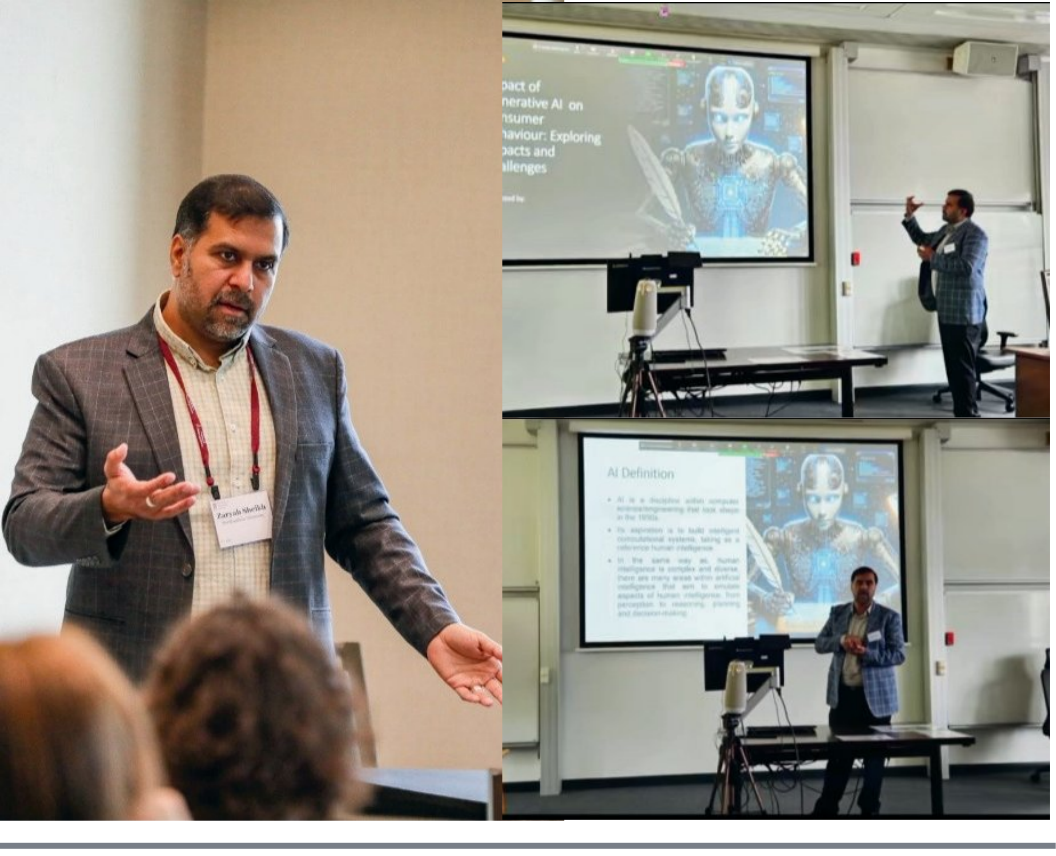
Having led the design and validation of new Master’s programs, I’m often asked what a “future-proof” marketing curriculum looks like in 2030, especially for developing economies. The worst thing we can do is teach 2010 frameworks with 2025 case studies. A future-proof curriculum must be built around three pillars: data literacy, behavioral science, and contextual adaptability—not just digital tools, but the judgment to know when and how to use them. For developing economies specifically, the curriculum must be unapologetically local in application while globally rigorous in theory. Students in Pakistan aren’t operating in Silicon Valley conditions; they’re navigating infrastructure gaps and leapfrog markets that demand creative problem-solving over textbook execution. Most importantly, it must teach students how to learn, not just what to know. The competitive advantage in 2030 won’t be knowledge; it will be adaptability.
That adaptability—born from two decades of crossing sectors, borders, and disciplines—is what I hope to pass on to the next generation of scholars and practitioners. Whether in the classroom, the boardroom, or the research lab, the future belongs to those willing to reset, rewire, and rethink.