

The “Experience China: Innovation for the World, Intelligence for the Future” International Graduate Academic Exchange Program, hosted by the China Scholarship Council and organized by the University of Science and Technology of China (USTC), with the Office of International Cooperation, the International College and the Division of Information and Intelligence at USTC jointly coordinating the program, brought 90 international graduate students from universities in and beyond Anhui Province to Hefei on October 15–16. Under the theme “Artificial Intelligence and Interdisciplinary Integration,” participants explored the latest frontiers through keynote speeches, student presentations, an academic poster exhibition, academic salons, and visits to leading innovation sites.
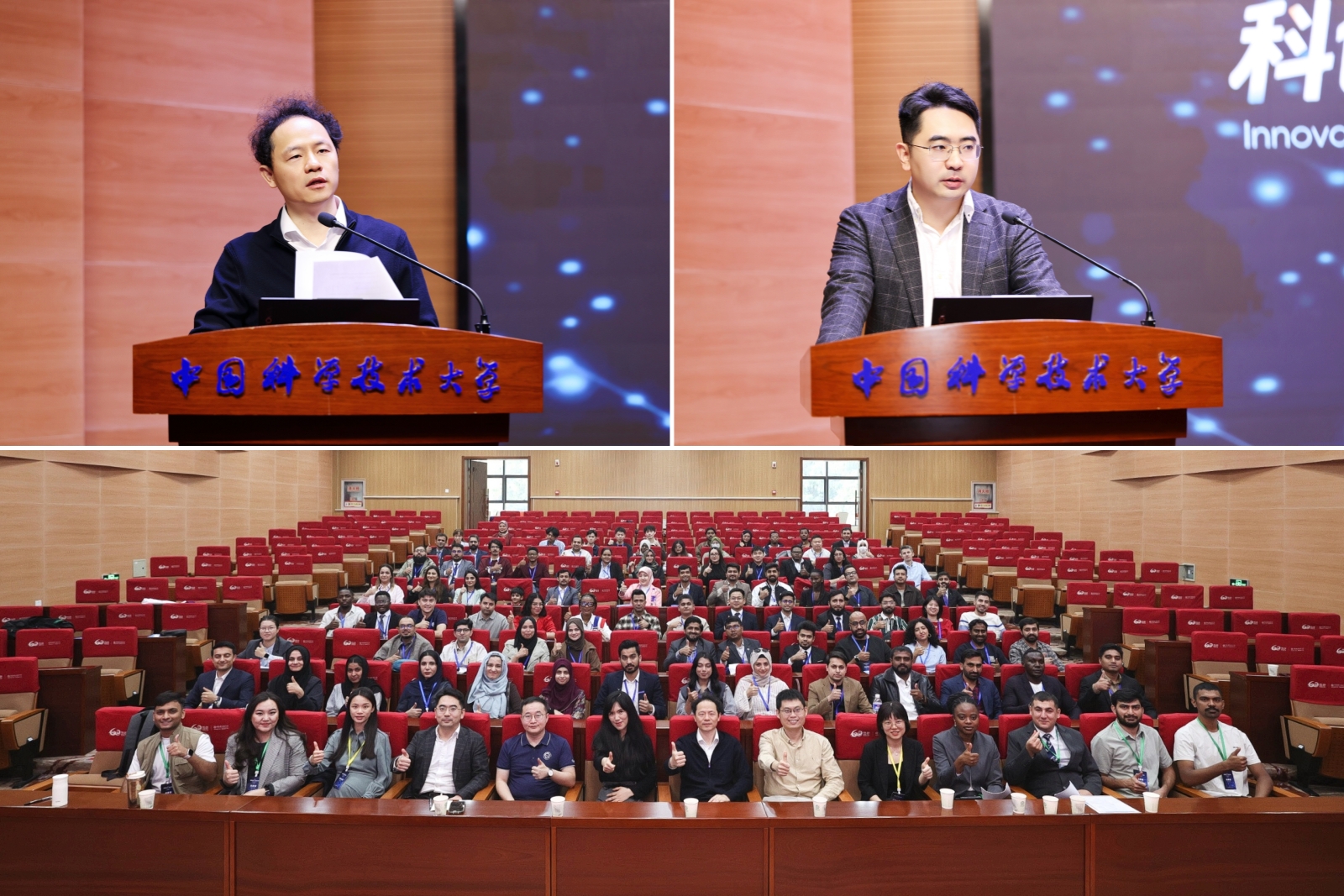
The program opened on the morning of October 15 at the H2O Auditorium on USTC’s East Campus. In his opening address, Professor Kun QU, Director of USTC’s Office of International Cooperation, welcomed the experts and international students from universities across China. He described the event as more than a platform for academic exchange — a chance for young scholars to cross disciplinary boundaries and channel their collective creativity. Stressing that the future of science lies in the convergence of disciplines, he encouraged students to seize the opportunity to broaden their horizons, build lasting friendships, and experience the dynamism of China’s scientific and technological innovation firsthand.
Professor Xiangnan HE, Deputy Dean of USTC’s School of Artificial Intelligence and Data Science, echoed the theme in his remarks, noting that many breakthroughs in AI today are born at the intersection with other disciplines. He invited students to break down disciplinary walls and let ideas collide through open exchange.
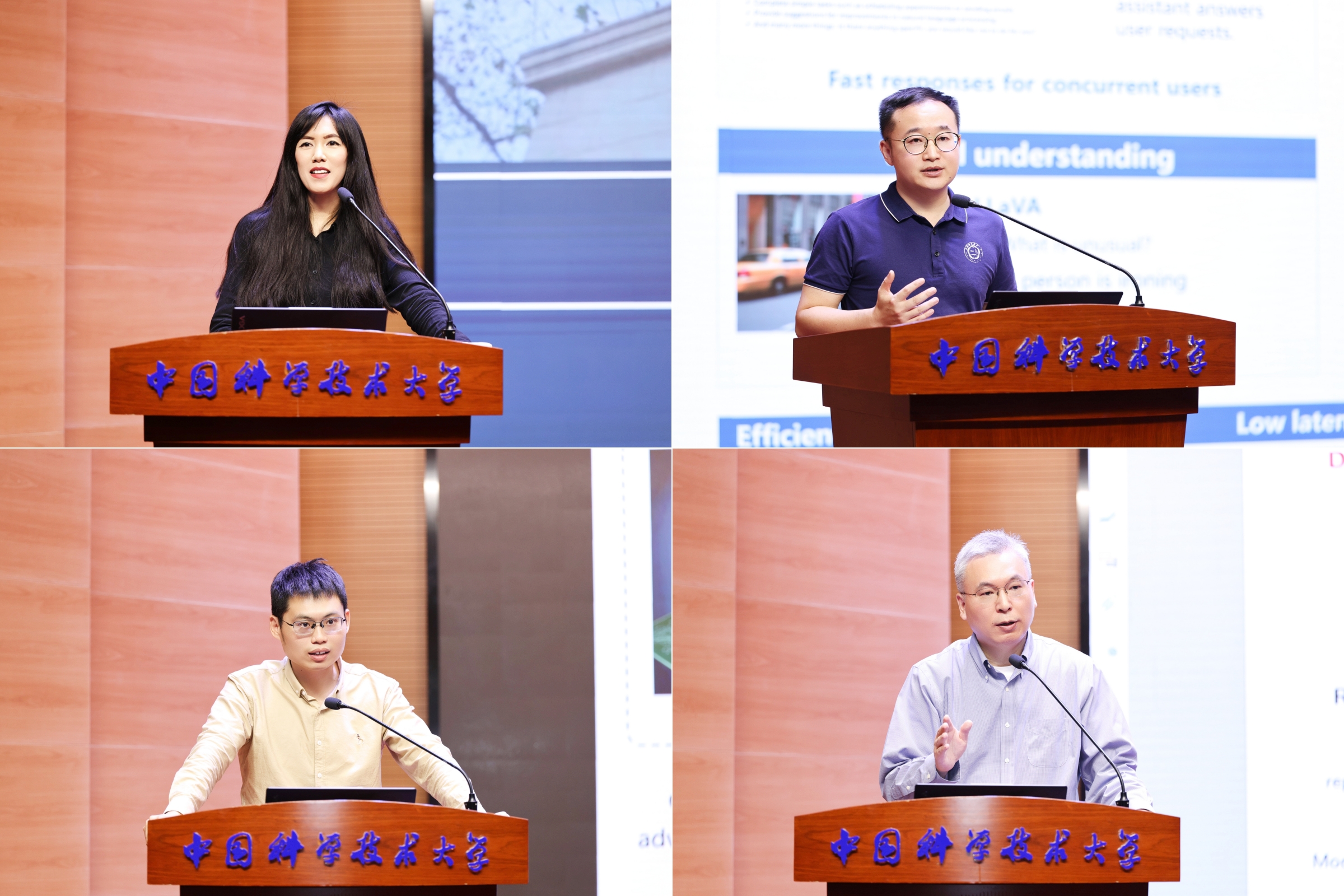
Four keynote lectures followed. Professor Zhaohui SU of the School of Public Health, Southeast University, explored “1+1=11: Promises and Potential of Interdisciplinary AI Applications and Integration in Public Health.” Professor Cheng LI from USTC’s School of Computer Science and Technology shared recent advances in LLM inference at scale; Professor Hu DING from USTC’s School of Computer Science and Technology delivered a talk on computational geometry in the AI era; and Professor Jinhui XU from USTC’s School of Information Science and Technology presented his research on geometry-enhanced deep learning methods and applications. Together, the talks covered public health, computational geometry, large language models, and deep learning, highlighting the diverse ways AI can intersect with other disciplines.
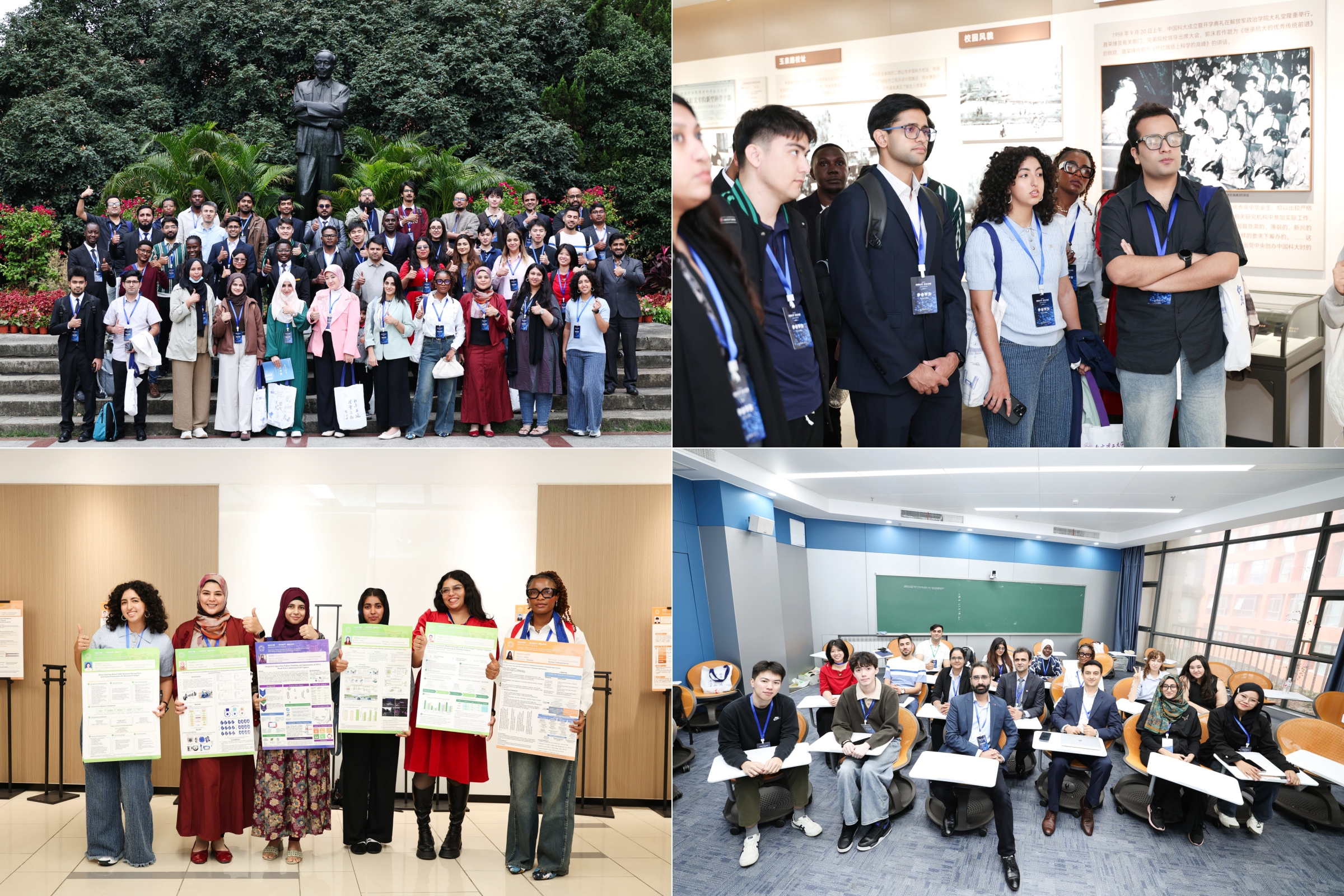
That afternoon, students presented their work in parallel sessions held at the Fifth Teaching Building, organized around four tracks: AI + Fundamental Sciences, AI + Engineering & Technology, AI + Life & Health Sciences, and AI + Humanities & Social Sciences. An academic poster exhibition and salon followed, giving students from different universities and disciplines room to mingle, learn from one another, and build cross-disciplinary connections.
On the morning of October 16, the closing ceremony and certificate presentation took place in Lecture Hall 106, Building 3, on USTC’s High-tech Campus. Professor Jian YANG, Deputy Dean of USTC’s School of Information Science and Technology presented certificates to the participating students.
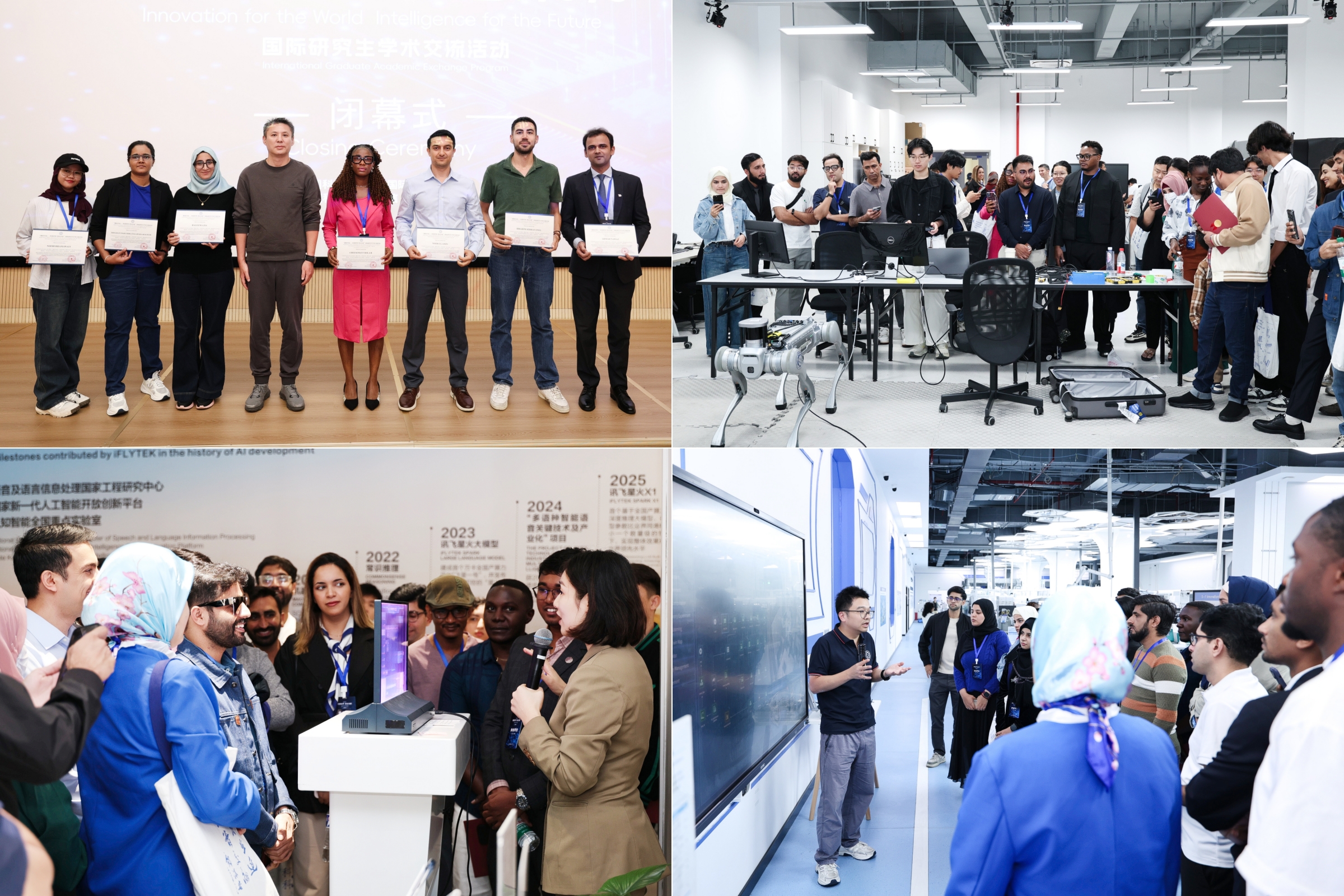
Beyond the lecture halls, participants visited USTC’s Embodied Intelligence Laboratory and Precision Chemistry Laboratory for an up-close look at frontier research, and toured iFLYTEK to experience the achievements of China’s AI industry firsthand.
As a key component of the China Scholarship Council’s “Experience China” series, the program combined academic discussions on cutting-edge technologies with visits to research laboratories and a leading technology company. It offered international graduate students a high-level platform for academic exchange — deepening their understanding of China’s scientific and technological innovation and the frontiers of artificial intelligence, while fostering mutual learning among young talents from around the world.
Separated by mountains and oceans, yet united by a shared passion for knowledge; disciplines have boundaries, but the future does not. During the two-day program, international graduate students explored the potential of interdisciplinary integration between artificial intelligence and diverse disciplines through academic exchanges, and experienced the practices and dynamism of China’s scientific and technological innovation during field visit. Though the program has drawn to a close, the cross-disciplinary dialogue among young scholars is only just beginning — and it is our hope that they will take this occasion as a starting point to make open collaboration the norm of scientific innovation and let the light of science and technology shine into humanity’s shared future.